
With Tracey Morgan’s teacher comments, as a teacher, we saw in real-time, that one comment can change a students’ whole prospective.
Let’s take a deeper dive.
When I heard Tracey Morgan talk about how mean some of his teachers were growing up, I had mixed emotions.
Part of me hurt for him.
Every child deserves to feel seen, valued, and encouraged. The truth is, some students carry painful memories from school long after they graduate. A harsh comment. A public embarrassment. A teacher who gave up on them before they ever had a chance to prove themselves.
As educators, that is hard to hear because many of us spend our entire careers trying to be the exact opposite.
But his comments also made me think about something much bigger.
As teachers, we have to remember that one negative moment can erase a thousand positive ones.
Think about it.
A student may not remember every fun lesson, every reward, every encouraging conversation, or every time you stayed after school to help them. They may not remember every engaging lesson you spent hours planning or every opportunity you created for them to succeed.
But they will remember the day they felt embarrassed.
They will remember the sarcastic comment.
They will remember the moment they felt unseen, unheard, or not good enough.
That is the weight of our profession.
Not because teachers are perfect.
But because our words carry weight.
I often tell new teachers that students rarely remember every worksheet, quiz, test review, or assignment. They remember how you made them feel. They remember whether your classroom felt safe. They remember whether you saw something in them before they saw it in themselves.

We get tired.
We get overwhelmed.
We get frustrated.
We have personal lives.
We carry our own burdens.
We pour from cups that are sometimes almost empty.
But even in that, we have to remember that our bad day has the potential to become someone else’s lifelong memory.
That does not mean teachers are not human.
That is a responsibility none of us should take lightly.
Then there was another part of the conversation that stuck with me.
The idea that teaching is somehow a person’s ceiling.
That if you are a teacher, it must mean you could not become something “greater.”
That mindset says more about how society values education than it does about teachers.
Because let’s be clear: teaching is not the bottom of anything.
Teaching is foundational.
Teaching is the profession that helped create every other profession.
Doctors sat in classrooms.
Lawyers sat in classrooms.
Actors sat in classrooms.
Engineers sat in classrooms.
Professors sat in classrooms.
Entrepreneurs sat in classrooms.
Scientists, nurses, authors, business owners, athletes, and leaders all sat in someone’s classroom.
At some point, someone taught them how to read, how to think, how to problem-solve, how to communicate, how to question the world, the importance of being a lifetime learner, and how to believe they could become something.
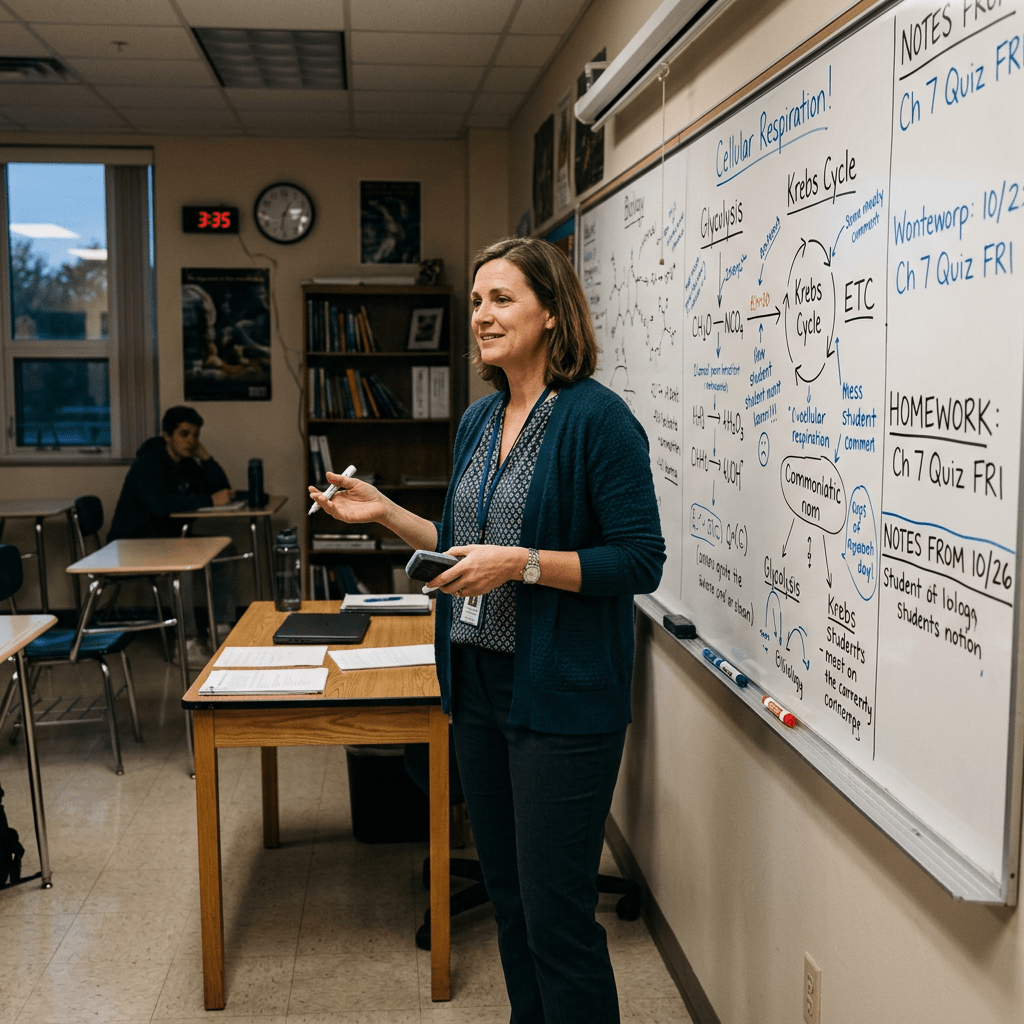
So how did teachers become the doormat profession?
How did the people responsible for building the foundation become the people society feels most comfortable dismissing?
We are blamed for low test scores.
Blamed for student behavior.
Blamed for lack of motivation.
Blamed for what happens at school and, somehow, what does not happen at home.
We are expected to teach, parent, counsel, protect, motivate, redirect, inspire, document, communicate, differentiate, remediate, and still smile while doing it.
And even after all of that, there are still people who talk about teaching like it is a backup plan.
Like it is what you do when you could not do anything else.
That is not only unfair. It is disrespectful.
Yes, there are teachers who go on to do other great things. Teachers become principals, professors, superintendents, curriculum writers, authors, entrepreneurs, speakers, consultants, business owners, and leaders in spaces far beyond the classroom.
And we should celebrate that.
Teaching builds skills that transfer everywhere. Leadership. Communication. Creativity. Problem-solving. Emotional intelligence. Organization. Public speaking. Crisis management. Data analysis. Relationship-building. The list goes on.
A good teacher is not “just a teacher.”
A good teacher is a strategist, mentor, coach, manager, designer, performer, counselor, and leader—often all before lunch.
But here is the part people also need to understand.
Some teachers do not stay in the classroom because they lack ambition.
Some teachers stay because they love it.
Some teachers stay because they know their purpose is connected to students. Some teachers stay because they still believe in the power of a classroom. Some teachers stay because they know there is nothing small about helping a child grow.
And they should not be beaten up for that.
Choosing to teach is not a lack of growth.
Choosing to stay in teaching is not failure.
For some people, the classroom is not a ceiling. It is a calling.
And calling does not always look like climbing a corporate ladder. Sometimes calling looks like showing up every day for students who need consistency. Sometimes calling looks like explaining the same concept five different ways until it finally clicks. Sometimes calling looks like being the adult a child can count on when everything else around them is unstable.
That matters.
That is meaningful.
That is legacy work.
Now, does that mean we ignore the pain some students experienced in school?
Absolutely not.
Those stories matter too.
There are students who were harmed by words spoken by teachers. There are students who were overlooked, embarrassed, underestimated, or mishandled. We cannot ask people to celebrate teachers while also silencing the students who were hurt by them.
Both truths can exist.
Some teachers caused damage.
And some teachers changed lives.
Some students still carry wounds.
And some students are alive, successful, confident, and hopeful because a teacher refused to give up on them.

That is why this conversation matters.
The goal is not to defend every teacher.
The goal is to remind every teacher that our influence is real.
The goal is not to say teachers are above correction.
The goal is to say teachers are worthy of respect.
We have to be honest enough to admit that our words can hurt.
And we have to be bold enough to remind the world that our work matters.
Because it does.
The teacher who bought lunch when no one knew a student was hungry.
The teacher who stayed after school without extra pay.
The teacher who noticed anxiety before anyone else did.
The teacher who turned a lesson into a life skill.
The teacher who became the safe place.
The teacher who pulled a student aside and said, “You are better than this,” not to shame them, but to remind them of who they could become.
Those stories may not always go viral.
But they happen every single day.
Teaching is one of the few careers where you may not see the fruit of your work until years later. Sometimes you do not know the impact you made until a former student walks up and says, “You probably do not remember me, but you changed my life.”
And that moment will remind you why you kept showing up.
So here is my thought.
Teachers, we have to be careful with our words. A thousand positive pushes can be erased by one negative outburst. Not because we are bad people, but because children are still becoming. What we say can either help shape confidence or create a wound they spend years trying to heal.
And to everyone else, remember this: teaching is not a ceiling.
Teaching is not a consolation prize.
Teaching is not a profession for people who could not do more.
Teaching is the profession that makes “more” possible for everybody else.
Some teachers will leave the classroom and do amazing things.
Some teachers will stay in the classroom and do amazing things.
Both deserve respect.
Both deserve honor.
Both deserve to be seen.
So let’s have the real conversation. Comment below:
What is something a teacher said to you that you still remember? Shout out your favorite teacher and why?
Was there a teacher who changed your life for the better?
Did a teacher ever say something that stayed with you in a negative way?
And for my educators: how do you remind yourself to be intentional with your words, even on the hard days?
Let’s talk about it with honesty, grace, and respect.
Because the conversation is bigger than one comment.
It is about impact.
It is about memory.
It is about responsibility.
And it is about finally giving teachers the respect they deserve while still holding the profession accountable to the children we serve.


Leave a comment