
The Ultimate Guide to Student Mastery
It’s that time of the year…Thanksgiving, Christmas, and Spring Break have came and went, your principal is stressed, thus stressing you, about data being low, students are antsy for summer, and your down to just two days left for “sick days”.
Every meeting, every lesson plan, every professional development, and every nightmare is about the “dreadful” STAAR. How do you stay out of a mundane review coma, but still ensure your students can master the objective? All the fancy teaching strategies, “Tell All” STAAR review books/materials, and review methods are great for fluff, which only adds to your anxiety, because you’re still left at the end of it all…wondering the main question every good teacher around this time of year asks… “Did I do enough to ensure that my students are successful on STAAR?”
This may seem like a daunting task to create the right recipe or formula for the “Perfect STAAR Review”, with the right amount of checking for understanding, activities, and use of STAAR materials. Don’t fret, my pet…some of the crucial elements to mastery, you are already doing, we just need to add a pinch of this and a dash of that, and mix. Follow these 5 steps to Student Mastery Nirvana.
- Use of Lead4Ward Documents and Materials
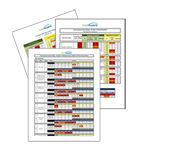
The first step in acing your STAAR review, is knowing what to review. Lead4ward provides documents to identify which TEKS are more heavily tested, TEKS frequency distribution charts, how the TEKS are being tested, misconceptions students may have, and STAAR questions already aligned to the objectives. This website is a MUST. If you are not familiar with their site and materials, one can see why you’re overwhelmed. These magical group of people have already gathered necessary materials needed to guiding your review. By using these materials, plus more, offered on the website you have a good foundation for backwards planning and identifying what “POWER” TEKS you need to give some TLC to when reviewing.
- Rotations…NO to “Sit and Get”
Step 2: Do not limit the review process to “sit and get” or teach the objective the same way it was taught before, especially if a large amount of students did not master the objective. When a student is forced to “sit and get” usually in a worksheet form type of learning through excessive lecturing by teacher, is not the ideal way for students to retain information. There are so many issues using this as a review method: 1) its all teachers lead, students are basically just listening. 2) How are you checking for understanding? 3) Retention of the information is going to be a lot lower being that they are not involved in the learning. Some teachers believe that honing in on a concept is more beneficial but teaching TEKS in isolation, is not allowing students to independently think on their own, defeating the purpose of the review. Small grouping, pull outs, independent practice, technology, manipulatives, activities, rotations, and games are an excellent way to engage, work on individual student’s misconceptions, and create more opportunities for check for understanding.

- “CDR” Often…
Step 3: So Checking for Understanding , Data “Dig”, & Reteach (‘CDR’) often. Checking for Understanding (CFU) is the vital part of this combo. This is where Lead4ward can be useful again, because their app provides all the resources stated before, a CFU timer (being that a teacher should check for understanding every eight minutes), and most importantly “Quickchecks” which provides fun, engaging, and fast strategies to CFU. CFU can be as easy as whiteboards and respond cards to technology apps to plain pencil to paper assessments and independent practices. Once data is collected from the CFU method of choice, analyze the data. Overall, what TEKS did the students do well in? What TEKS were lower? How can I reteach the lower TEKS? What students need tutoring in 6.3 B? Did the students master the objective you just taught? One main benefit of the use of technology to CFU, is that it can do both CFU and analyze data. Some good examples are Edpuzzle, Kahoot It, and Plickers. My fav is Quizizz, which is an online quiz (already made or you can create your own), where students can work at their own pace to answer the questions, and earning points as they do so. It graphs and analyzes what questions the class and individual students are missing, to know what to reteach. If your school or district has the budget, an even better way to CFU is a program called Scribesense, where all quizzes, assessments, homework, etc. are graded, analyzed, grouped, and graphed for you.

- Interests, Rewards, and Incentives…OH MY
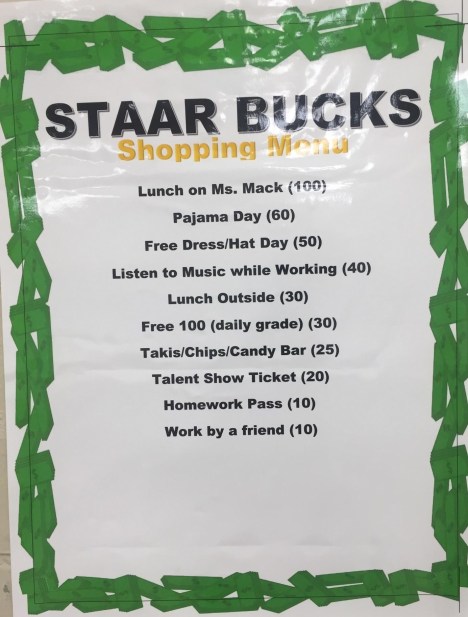
Step 4: Students, especially the ones today, need to be engaged and motivated, to drive their learning. Learning is based on experiences. Teachers must relate learning to them whether through motivation or interest. Reference some of their favorite songs, games, television shows, or hobbies to a lesson or review, students will instantly become more engaged and invested in learning. One can also motivate the students through a PBIS system, where students can receive rewards and incentives by earning points or ‘bucks’, again increasing student engagement. The whole goal of this step is to make reviewing fun and by creating competitions and rewards, the students can take ownership in learning.
- Throw down
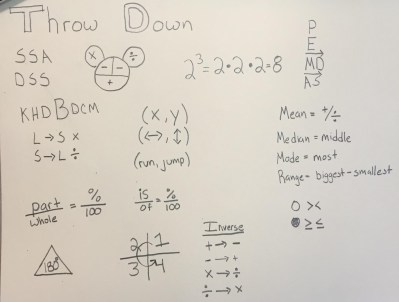
Step 5: Form a routine and testing strategies for the students to “throw down” every time they are testing. Students are taught several tools, mnemonics, symbols, and illustrations, that are written down on the test to be used as a reference guide. Therefore, giving students a resource to perform difficult tasks on the test, throughout the entirety of the testing period, because often times, testing anxiety or haziness sets in and we’re struggling to remember even basic skills, with the Throw down it can constantly be used to go back to the ‘dumped’ information. The earlier the teacher creates this “braindump” method and throwing down before starting on a test pattern, by the time STAAR is tested students will be able to transfer this learnt testing strategy, from one’s mind to paper, and use it as a reference sheet.
Godspeed and the may the force be with you. Again 5 steps to….. leaving the mundane STAAR review methods behind and every teacher arriving to STUDENT MASTERY NIRVANA!!!
 Educators HQ
Leave a comment