“My students can’t perform well in math because they can’t comprehend the question.” “If I teach math, why do I have to teach reading as well?” Ask yourself WHY??? Also ask yourself on how can I incorporate reading in my math class. There are several ways to include reading in math while building their reading comprehension. By creating a interdisciplinary/cross curricular lesson with reading and math aids in building the students vocabulary, comprehension, and an overall better understanding in all contents.
- A reading comprehension worksheet can be included in the class as a Do Now, think-pair-share, independent practice, etc. I would print reading comprehension worksheets from http://www.k12reader.com based on the topic being taught, these are a good introduction on the topic, provided key vocabulary, and ask necessary guiding questions.
- Coral, group reading, and read out louds. Even through math is not as literacy heavy as reading or social studies, the small pockets of reading, such as the objectives, word problems, directions, explained responses, etc. are just as important as reading a passage.
- Literacy anchor charts/Vocabulary Catchers…seen at trainings and Professi0nal developments ( see: Professional Development Blues)
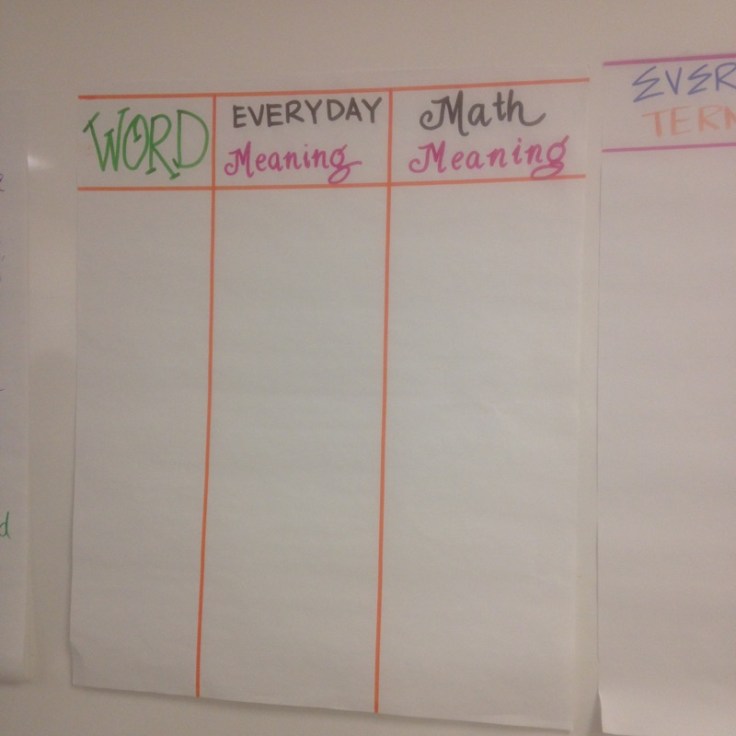
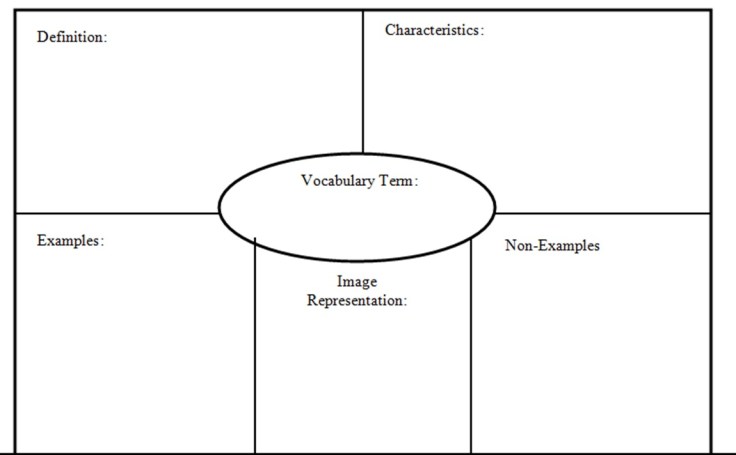
with anchor charts, like above, it helps students to relate math terms to real world and be able to comprehend key words to better dissect the process and operations needed to be performed. Also the Frayer model templates can be used to build vocabulary books.
- In your mathematical interactive journals give the students opportunities to write by providing them open ended responses, explanation responses, math related short answers, or essays. This also helps to build comprehension, through reciprocal teaching and explanation of their solution.
- Give the students opportunities to articulate and speak on vocabulary, ideas, and processes with different literacy applications such as Think-Pair-Share, reciprocal teaching, Jig Saw, etc.
So to all my naysayers….Reading comprehension should be the focus of math instruction and this is proof that literacy in math is possible. Often times when a student misunderstands just a single word, the whole comprehension of the problem goes down the drain and by utilizing some of these techniques provides students with ample opportunities to build vocabulary, receive various instructional methods, checks for understanding, and more intensive reading strategies.
 Educators HQ
Leave a comment